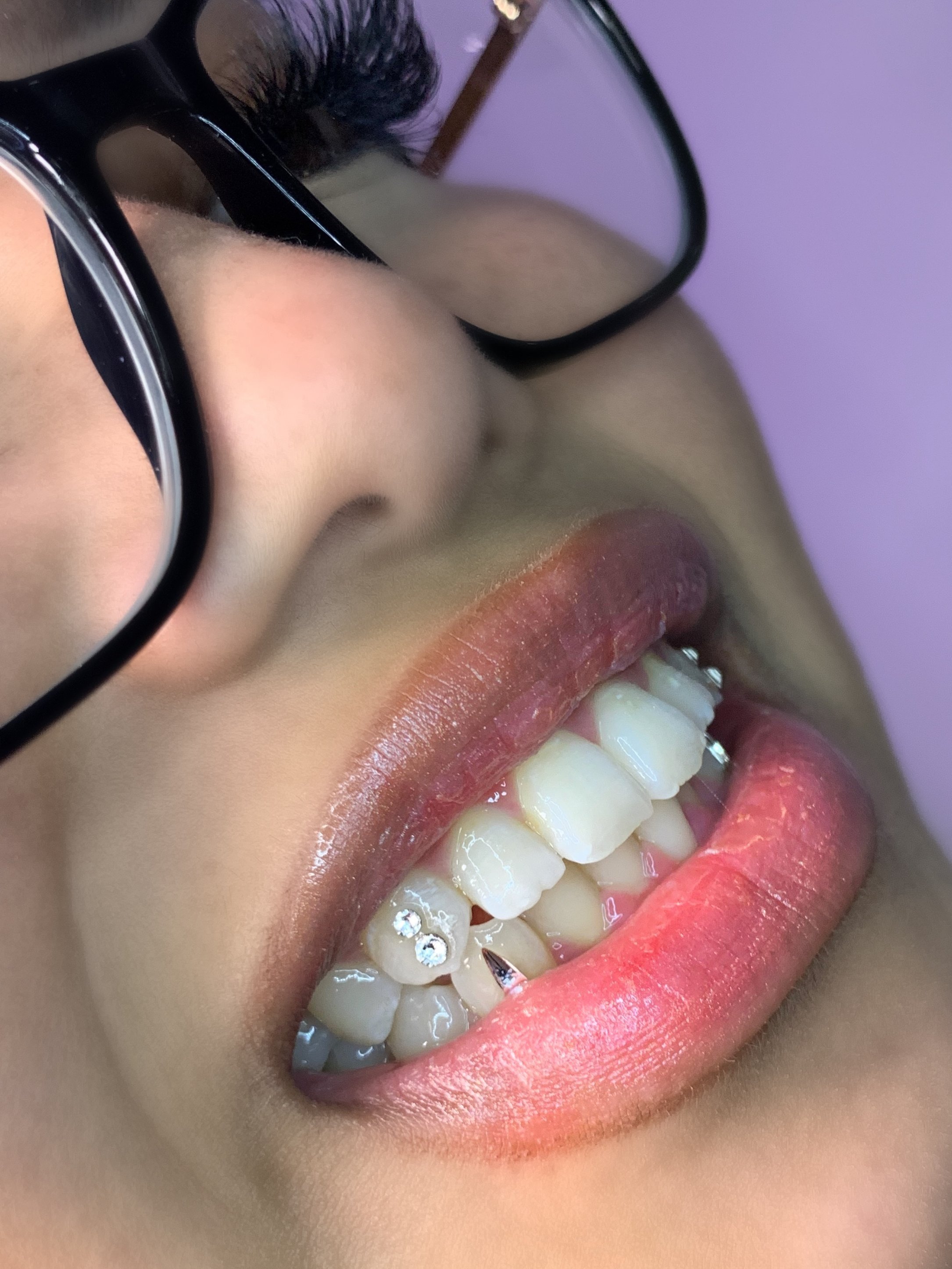

You have just left your appointment with a brand new tooth gem, and it looks incredible. Now the question is: how do you keep it looking incredible for as long as possible? Proper aftercare is the difference between a gem that lasts months and one that lasts years.
The First 24 Hours
The bonding adhesive reaches full strength quickly, but treating your gem gently in the first day sets the foundation for long-term retention:
- Wait 1 hour before eating or drinking
- Avoid hard foods for the first 24 hours — nuts, hard candy, ice, raw carrots
- Avoid sticky foods — caramel, toffee, chewing gum
- Do not touch or play with the gem with your tongue or fingers
Daily Oral Hygiene
Your tooth gem does not change your oral hygiene routine — it enhances the importance of it. Here is how to brush and floss around your gem:
- Brush normally — use a soft-bristle toothbrush and brush around the gem gently. Do not scrub directly on the gem surface
- Floss daily — floss normally between teeth. The gem does not interfere with interdental cleaning
- Use non-abrasive toothpaste — avoid whitening toothpastes with heavy abrasives, as these can wear on the composite around your gem
- Rinse after meals — water rinsing helps prevent food debris from accumulating around the gem edges
What to Avoid
These habits put unnecessary stress on the bonding and are the most common causes of early gem loss:
- Biting into hard foods directly — cut apples, carrots, and crusty bread rather than biting into them
- Chewing ice or pens — a surprisingly common cause of gem displacement
- Using your teeth as tools — opening packages, tearing tape
- Picking at the gem — if you notice the gem feeling loose, contact us rather than trying to remove or re-seat it yourself
- Abrasive oral products — activated charcoal toothpaste, baking soda rinses, or aggressive mouthwashes
Signs Your Gem Needs Attention
Contact us if you notice any of the following:
- The gem feels loose or moves when touched
- The edges of the composite feel rough or uneven
- Discolouration around the gem border
- Any sensitivity or discomfort in the area
Early intervention prevents complete gem loss. In most cases, a quick re-bonding appointment resolves the issue without needing a new gem.
Longevity Tips
Clients who follow these guidelines consistently see the best results:
- Maintain excellent oral hygiene — healthy gums and clean teeth provide the best bonding surface
- Schedule regular dental checkups — your dentist can monitor the gem during routine visits
- Be mindful of contact sports — if you play sports, consider a mouthguard to protect both your teeth and your gem
- Avoid DIY removal — when it is time for your gem to come off, have it professionally removed to protect your enamel
Questions about your tooth gem? We are always available to help.
Contact UsFor more detailed preparation information, visit our tooth gem preparation guide. And if you are just beginning your research, start with our guide on what tooth gems are and how they work.