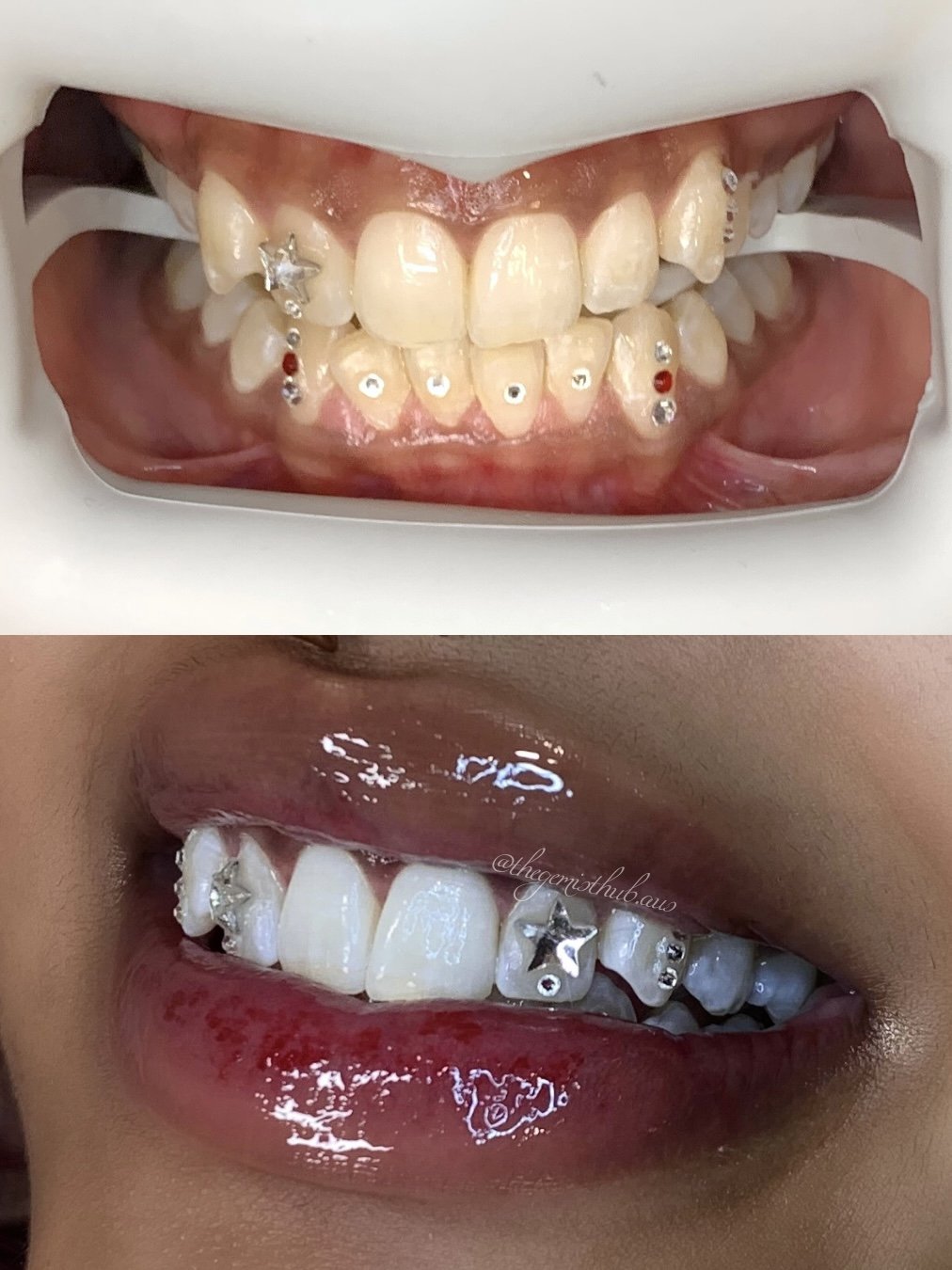

"How long will this last?" is the second most common question I hear (right after "Is it safe?"). The honest answer? It depends. I've seen tooth gems last anywhere from six months to over three years. The wide range isn't random — it's the result of specific, predictable factors that we can control. As an AHPRA-registered Oral Health Therapist who's applied over 600 gems since 2021, I've tracked these patterns closely. Let me break down exactly what determines how long your tooth gem will stay sparkling.
The Typical Lifespan: What to Expect
Most professionally applied tooth gems last between 6 months and 2 years. That's the realistic window you should plan for. Some clients get lucky with gems lasting 3+ years, while others may see theirs debond after 4-6 months despite doing everything right. Why the variation? Because teeth are living structures in a dynamic oral environment — not static surfaces.
Here's what I've observed across my client base:
- 6-12 months: About 30% of clients — typically those who are harder on their teeth (grinding, chewing hard foods, contact sports)
- 12-24 months: About 50% of clients — the average experience with normal oral habits and good aftercare
- 24-36+ months: About 20% of clients — meticulous aftercare, ideal tooth position, minimal stress on the bonding site
My personal record? A client who's had the same Swarovski crystal for 38 months and counting. She follows every aftercare guideline religiously, has excellent oral hygiene, and chose a canine position (more on placement later). But she's the exception, not the rule. Planning for 12-18 months is realistic.
Factor #1: Application Quality (The Foundation of Longevity)
This is the single most important variable — and it's entirely determined before you even leave the appointment. A perfectly applied gem can last years. A poorly applied gem won't make it past six months, no matter how careful you are.
What makes professional application superior?
- Proper enamel preparation: The tooth surface must be completely clean, dry, and oil-free. I use pumice polish, phosphoric acid etch (37% for 15-30 seconds), and isolation techniques to ensure zero contamination. Saliva or moisture during bonding? That's instant failure waiting to happen.
- High-quality bonding composite: Dental-grade light-cured resin bonds chemically and mechanically to enamel. DIY kits use cosmetic adhesive that starts degrading the moment it hits saliva.
- Complete polymerisation: I cure the composite from multiple angles for 20-40 seconds total. Undercured composite is weak composite.
- Excess composite removal: Any overflow around the gem's edges creates a plaque trap and stress point. I remove it meticulously before final curing.
- Bite assessment: If the gem interferes with your bite (even slightly), it'll debond under pressure. I check occlusion before you leave.
DIY kits skip all of this. They rely on you having perfect technique with zero training, using inferior materials, in uncontrolled conditions (probably in a bathroom mirror with poor lighting). The result? Gems that fall off in days or weeks. I've rebonded dozens of DIY failures — and the difference in longevity is night and day. Professional application isn't a luxury; it's the baseline for durability.
"I tried a DIY kit first and the gem fell off in two weeks. I went to Nhi and that gem lasted 18 months. Same tooth, completely different outcome. The application quality is everything." — Emma, Parafield Gardens client
Factor #2: Tooth Position (Location, Location, Location)
Not all teeth are created equal when it comes to gem longevity. The position you choose directly impacts how much stress the bonding site experiences daily. Here's my ranking from most to least durable:
- Upper canines (best longevity): These teeth experience moderate chewing forces and are slightly angled, which distributes pressure away from the gem. My longest-lasting gems are almost all on upper canines.
- Upper lateral incisors (excellent): Popular position, good visibility, minimal bite stress. Great balance of durability and aesthetics.
- Upper central incisors (very good): The most requested spot for maximum visibility. Slightly more bite contact than laterals, but still a solid choice for longevity.
- Lower incisors (good): Less popular for visibility reasons, but excellent durability because they're not primary chewing surfaces.
- Premolars and molars (shorter lifespan): I generally advise against these unless you specifically request it. Heavy chewing forces mean gems debond faster — 6-12 months is typical here.
During your consultation, I'll help you choose a position that balances aesthetics with practicality. If maximum longevity is your priority, I'll steer you toward canines or lateral incisors. If you want centre-stage sparkle, central incisors are worth the slightly shorter lifespan.
Want a tooth gem that lasts? Start with professional application by an AHPRA-registered dental professional with 600+ successful placements.
Book Your AppointmentFactor #3: Oral Hygiene Habits (The Daily Impact)
Your tooth gem won't cause cavities, but poor oral hygiene can compromise the bonding and create problems around the gem. Here's how your daily habits affect longevity:
- Brushing technique: Brush twice daily, but avoid aggressive scrubbing directly on the gem. Use gentle circular motions. An electric toothbrush is fine — just don't drill the gem with the bristles.
- Flossing around the gem: This is crucial. Food debris and plaque accumulation at the gum line can cause inflammation that destabilises the bonding site. Floss carefully but thoroughly.
- Mouthwash: Alcohol-free mouthwash is ideal. High-alcohol formulas can degrade the composite over time (though it takes months of daily use to make a noticeable difference).
- Professional cleanings: See your hygienist every six months. Inform them about the gem so they can clean around it carefully without dislodging it.
I've had clients with textbook application lose their gems early because they neglected hygiene and developed gum inflammation that undermined the bonding. Conversely, clients with meticulous hygiene routines consistently hit the 18+ month mark. Your daily habits matter as much as the application itself.
Factor #4: Diet and Lifestyle (The Stress Test)
Tooth gems are durable, but they're not indestructible. How you use your teeth directly impacts how long the gem survives. Here are the biggest lifestyle factors I've observed:
- Hard foods: Biting directly into apples, carrots, nuts, ice, or hard lollies creates shear forces that can debond gems. Cut hard foods into smaller pieces and chew with your back teeth.
- Sticky foods: Toffee, caramel, and chewing gum can pull on the gem. Not a dealbreaker, but worth being cautious.
- Grinding and clenching (bruxism): This is the biggest longevity killer. Chronic grinders rarely see gems last beyond 6-9 months because the constant pressure fatigues the bonding. If you grind at night, a mouthguard is essential — but even then, longevity is compromised.
- Contact sports: Mouthguard use is non-negotiable if you play rugby, AFL, hockey, or boxing. A direct hit to the face can debond a gem (or worse, damage your tooth).
- Nail biting and pen chewing: Using your front teeth as tools stresses the bonding site. Break these habits if you want your gem to last.
I've seen clients who treat their teeth gently get 2+ years from their gems, while clients who bite everything lose them in under a year. Your lifestyle is a choice — and it directly translates to longevity.
Factor #5: Gem Type and Material (Does Size Matter?)
The type of gem you choose has a modest impact on longevity. Here's what I've observed across different materials:
- Swarovski crystals (1.8mm-3.0mm): The most popular choice, and for good reason. They're lightweight, have a flat backing ideal for bonding, and the smaller sizes (1.8-2.5mm) last longer because they present less surface area for shear forces. Larger crystals (3mm+) look stunning but are slightly more prone to debonding under stress.
- 18K gold charms: These are heavier than crystals, which can work against longevity — but the difference is marginal. Proper bonding overcomes the weight factor. Gold charms last 12-18 months on average, similar to crystals.
- Opal and gemstone cabochons: Durability depends on the stone's hardness and the quality of the backing. High-quality opals with flat backs perform similarly to Swarovski crystals.
My recommendation? Choose the material and size you love aesthetically. The difference in longevity between a 2mm Swarovski and a 2.5mm gold charm is negligible compared to the impact of application quality and your oral habits. Read more about choosing the right tooth gem materials for your style and needs.
"I've had both Swarovski and gold gems from Nhi. The gold lasted 16 months, the crystal 19 months. Honestly, the difference was so small I just choose based on what matches my outfit goals now." — Jessica, Canley Vale client
Professional vs DIY: The Longevity Gap
Let's talk numbers. Across the DIY failures I've seen and rebonded:
- Average DIY gem lifespan: 2 weeks to 3 months
- Average professional gem lifespan: 12-18 months
- Longest DIY gem I've heard of: 6 months (rare outlier)
- Longest professional gem in my practice: 38 months (and counting)
The gap isn't subtle — it's a factor of 5-10x. DIY kits fail because they skip enamel etching, use non-dental adhesives, lack proper curing, and rely on untrained application. You might save $50 upfront, but you'll be rebonding every few months. Professionally applied gems are a one-time investment that lasts over a year. The maths isn't complicated.
Maximising Your Gem's Lifespan: Practical Tips
You can't control the application quality after you leave my chair (that's my job), but you can control everything else. Here's how to maximise longevity:
- Choose the right position: Upper canines or lateral incisors for maximum durability. Discuss your priorities (visibility vs longevity) during consultation.
- Maintain excellent oral hygiene: Brush gently, floss daily, use mouthwash, and see your hygienist every six months.
- Avoid hard and sticky foods: Cut apples, skip the ice chewing, and be cautious with caramel.
- Wear a mouthguard: Essential for grinders and contact sport athletes. Protects both your gem and your tooth.
- Break bad habits: Stop biting nails, pens, or using your teeth as tools.
- Monitor your gem: If it feels loose, rough, or irritating, contact me immediately. Early intervention can sometimes save it.
Follow these guidelines, and you'll consistently hit the 12-18 month range — or beyond. Ignore them, and even perfect application won't save you from early debonding.
When It's Time for Replacement
Eventually, every gem debonds. It's not a failure — it's the natural end of its lifespan. When your gem comes off, you have three options:
- Rebond the same gem: If it came off cleanly and the backing is still intact, I can reapply it for a fraction of the original cost.
- Choose a new gem: Many clients take this opportunity to try a different style, size, or colour. Variety is fun.
- Go gem-free: No judgment. If you're ready to move on, I'll ensure the bonding site is polished smooth and your enamel is perfect.
I offer rebonding services at a discounted rate for existing clients. Most people who've had a gem once want another — the sparkle becomes addictive. And if you're wondering about the safety of reapplication, read my article on tooth gem safety to see why professional removal and reapplication are completely enamel-safe.
The Bottom Line: Longevity Is Predictable
How long do tooth gems last? Between 6 months and 2+ years, with most clients experiencing 12-18 months. The outcome isn't random — it's the result of application quality (my responsibility), tooth position (our joint decision), and your daily habits (your responsibility). Do your part, and your gem will reward you with over a year of sparkle.
At The Gemist Hub, I've refined my technique over 600+ applications to maximise longevity without compromising safety or aesthetics. My clients consistently report gems lasting 15+ months because I don't cut corners. Proper etching, high-quality materials, meticulous bonding, and honest guidance about placement and aftercare — that's the formula.
Ready to get a tooth gem that lasts? Book your consultation at our Parafield Gardens or Canley Vale location. Let's create sparkle that stays — for the long run.