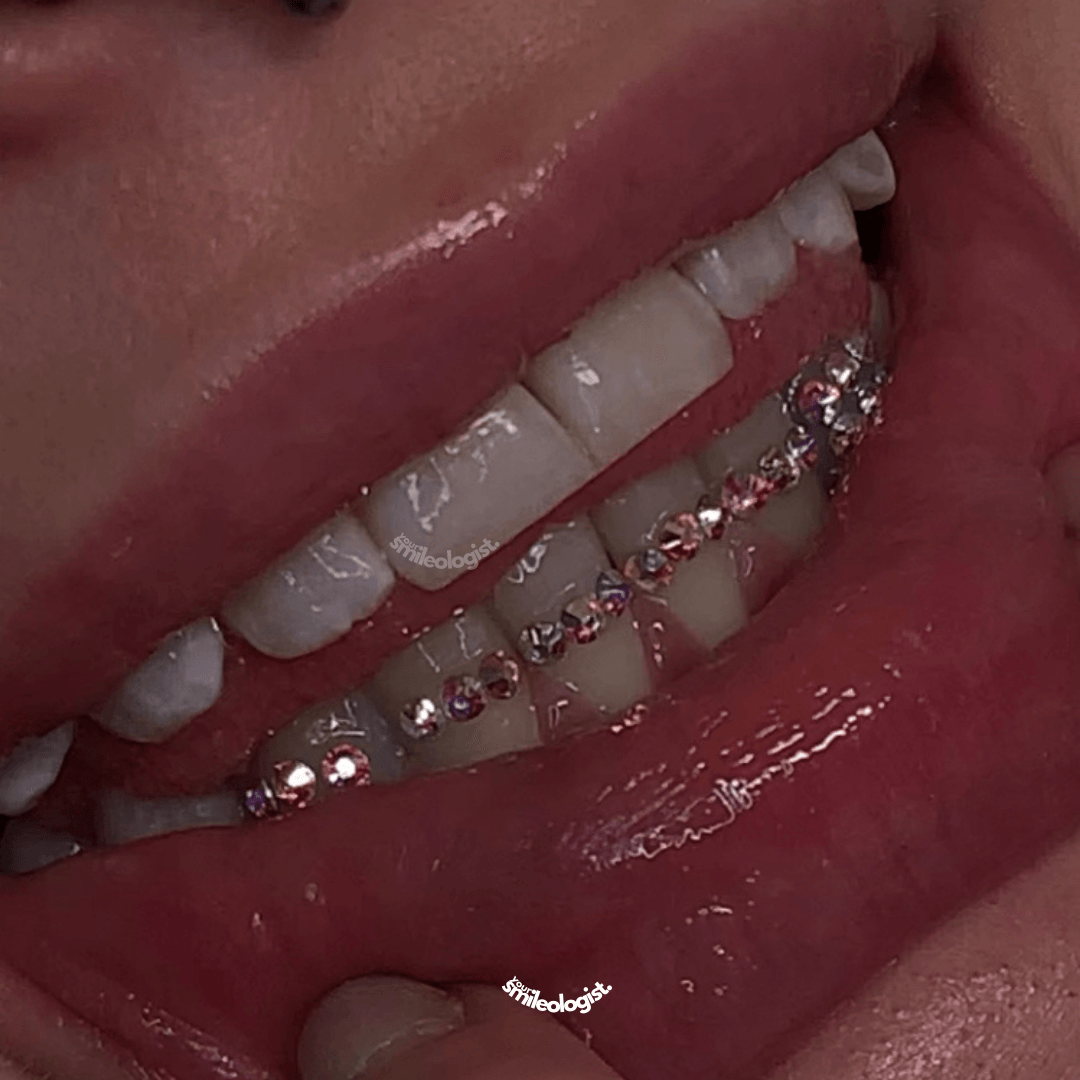

One of the most exciting parts of getting a tooth gem is choosing exactly where to place it. As an AHPRA-registered Oral Health Therapist who's placed over 600 gems across my Adelaide and Sydney locations, I guide this decision every single day.
The "best" tooth for gem placement depends on your unique smile, face shape, lifestyle, and personal style. But after hundreds of consultations, clear patterns emerge. Some placements consistently deliver maximum impact, while others work brilliantly for specific aesthetic goals.
Let me walk you through the most popular placement options, what makes certain teeth ideal candidates, and how I help clients choose the perfect spot for their sparkle.
The Most Popular Placement: Upper Canine
Hands down, the upper canine (the "fang" tooth) is the most requested placement for single tooth gems. About 60% of my clients choose this spot, and for good reason.
The upper canine offers the perfect balance of:
- High visibility – Catches light when you smile, talk, or laugh
- Natural prominence – Canines are slightly pointed and already draw the eye
- Safe bite positioning – Minimal contact during chewing compared to molars
- Accessible for application – Easy to isolate and bond properly
- Comfortable – Far enough from the gumline to avoid irritation
When you smile naturally, your upper canines are typically visible even in a closed-mouth smile. This means your gem gets noticed in photos, during conversations, and in everyday interactions without feeling overwhelming.
"The upper canine placement creates what I call the 'smile accent'—it enhances your natural expression rather than competing with it. It's bold enough to be noticed but subtle enough to feel like part of your smile."
One client described her upper canine gem perfectly: "It's like the perfect piece of jewellery—noticeable when you want it to be, but it doesn't take over the conversation."
The Close Second: Upper Lateral Incisor
The upper lateral incisor (the tooth immediately beside your front tooth) is my second most popular placement. It's an excellent choice if you want a slightly subtler look than the canine but still want high visibility.
Why clients love the lateral incisor:
- Visible in full smiles and most photographs
- Creates a softer, more delicate aesthetic than the canine
- Perfect for smaller gems or dainty styles
- Less prominent bite contact than canines in some people
- Works beautifully for multi-gem arrangements (paired with the opposite lateral incisor)
During your tooth gem appointment, I'll assess your specific bite pattern. For some clients, the lateral incisor actually makes less contact during chewing than the canine, which can extend gem longevity.
The lateral incisor is also my top recommendation for clients who want a "gateway gem"—testing the waters before committing to a more prominent placement.
Lower Canine: The Subtle Statement
Lower canine placement is less common but growing in popularity, especially among clients who want a gem that's visible to them when they look in the mirror but more subtle to others.
Lower canine gems create a unique effect:
- Visible when you talk or laugh with your mouth open
- Creates a "hidden sparkle" effect—discovered rather than immediately obvious
- Perfect for professional environments where subtle is preferred
- Often paired with an upper canine gem for symmetry
The main consideration with lower teeth is bite pattern. Lower canines can make more contact with upper teeth during chewing for some people. During your consultation, I'll have you bite together to assess contact points before finalising placement.
If your lower canines show heavy contact, I'll recommend an upper placement instead to maximise gem longevity.
Not Sure Where to Place Your Gem?
Book a consultation at The Gemist Hub. I'll assess your unique smile and bite to recommend the perfect placement for your goals.
Book in Adelaide or SydneyBite Considerations: Why Placement Matters for Longevity
This is where professional assessment becomes crucial. Not all teeth experience the same forces during chewing, and placement directly impacts how long your gem lasts.
Teeth are subjected to different types of contact:
- Heavy contact zones – Molars and premolars that grind food (avoid for gems)
- Moderate contact zones – Front teeth that bite into food (workable with proper placement)
- Light contact zones – Canines that guide jaw movement (ideal for gems)
- Minimal contact zones – Specific surfaces that rarely touch opposing teeth (best longevity)
During your consultation, I observe your natural bite and ask you to bite together, move your jaw side to side, and simulate chewing. This reveals which surfaces make heavy contact and which are protected.
Even on ideal teeth like upper canines, precise placement matters. A gem positioned slightly toward the lip surface (facial placement) typically avoids bite contact entirely. A gem placed too close to the biting edge can experience friction.
This assessment is why professional placement differs from DIY attempts. I'm not just sticking a gem somewhere pretty—I'm strategically positioning it for maximum retention and comfort.
How Face Shape and Smile Line Affect Optimal Placement
Your unique facial anatomy influences which placement looks best and gets noticed most.
Here's what I assess during consultations:
- Smile line (how much of your teeth show) – High smile lines expose more tooth surface, making gems highly visible; low smile lines may hide certain placements
- Lip shape and fullness – Fuller lips can partially conceal gems on smaller teeth; thinner lips expose more tooth surface
- Facial symmetry – I position gems to enhance natural symmetry or create visual balance
- Tooth size and shape – Larger teeth accommodate bigger gems; smaller teeth suit dainty styles
For example, if you have a low smile line where only your front four teeth show, placing a gem on your canine might not deliver the visibility you want. A lateral incisor or even central incisor placement might work better.
Conversely, if you have a very high smile line that shows a lot of gum, I'm extra careful with placement to avoid positioning gems too close to the gumline where they could cause irritation.
This is why I always ask clients to smile naturally during consultations. Photos capture one moment, but your dynamic smile reveals what will actually be visible day-to-day.
Multi-Gem Arrangements: Patterns and Symmetry
While single gems are most popular, multi-gem arrangements create stunning effects for clients who want bolder looks.
Common multi-gem patterns I create:
- Bilateral symmetry – Matching gems on both upper canines or both lateral incisors (creates balance)
- Scattered constellation – 3-5 small gems across multiple teeth (playful, editorial look)
- Gradient placement – Largest gem on canine with progressively smaller gems on adjacent teeth
- Paired accent – One upper gem paired with one lower gem on the same side
Multi-gem arrangements require even more precise planning. I map out placement digitally or with a wax pencil first to ensure proper spacing, visual balance, and bite safety across multiple teeth.
When selecting gem materials for multi-gem looks, I often recommend varying sizes rather than varying colours to maintain cohesion.
Nhi's Recommendations Based on 600+ Placements
After placing hundreds of gems across diverse clients, certain patterns consistently deliver the best results.
Here are my professional recommendations by goal:
- Maximum visibility and impact – Upper canine with 2.5-3mm crystal
- Subtle professional elegance – Upper lateral incisor with 1.5mm crystal
- Bold editorial statement – Multi-gem constellation across upper canines and lateral incisors
- First-time gem wearer – Upper canine with 2mm crystal (not too big, not too small)
- Long-term wear – Upper canine or lateral incisor in light contact zone
- Trying before committing – Upper lateral incisor (easy to place, easy to remove, good visibility)
I'm often asked: "Which placement lasts longest?" The honest answer is that proper application technique matters far more than placement location. A perfectly bonded gem on an upper canine can last 6-12+ months. A poorly bonded gem on the "ideal" tooth might fail in weeks.
That said, avoiding heavy bite contact zones and maintaining excellent aftercare absolutely extends longevity regardless of placement.
Placement Options to Avoid
Professional gem application means knowing when to say no.
I don't recommend gem placement on:
- Molars or premolars – Heavy chewing forces cause frequent gem loss
- Teeth with existing damage – Chips, cracks, or large fillings aren't suitable bonding surfaces
- Very small or peg-shaped teeth – Insufficient surface area for secure bonding
- Surfaces near the gumline – Risk of gingival irritation and difficult cleaning
- Areas of active decay – Dental health must be addressed first
If a client requests placement I consider risky, I explain why and offer alternative options. Your satisfaction and safety matter more than saying yes to every request.
The Consultation Process at The Gemist Hub
When you book your tooth gem appointment at either my Parafield Gardens or Canley Vale location, placement consultation is included.
Here's how we choose together:
- You share your aesthetic goals and lifestyle considerations
- I assess your smile line, bite pattern, and tooth anatomy
- We discuss visibility in different situations (talking, smiling, laughing)
- I demonstrate placement options using a mirror so you can visualise each option
- We select gem size and style based on chosen placement
- I mark the exact spot with a removable wax pencil for your approval before bonding
This collaborative process ensures you love your placement. I bring professional expertise on safety and longevity; you bring your personal style and preferences. Together, we create the perfect placement.
Your Perfect Placement Awaits
The best tooth for gem placement isn't a one-size-fits-all answer. It's the intersection of your aesthetic goals, facial anatomy, bite pattern, and lifestyle.
What I can promise is this: when you work with an AHPRA-registered professional who takes time to assess your unique smile, you'll get placement that enhances your natural beauty, lasts as long as possible, and makes you excited to show off your sparkle.
Whether you're drawn to the bold visibility of an upper canine gem, the delicate elegance of a lateral incisor placement, or the subtle statement of a lower canine, I'll help you make the choice that feels perfectly you.
Ready to find your ideal placement? Book a consultation at The Gemist Hub in Adelaide or Sydney. Every appointment includes a comprehensive smile assessment, and you'll never feel rushed into a decision. Your gem placement is an investment in your confidence—let's make it perfect.