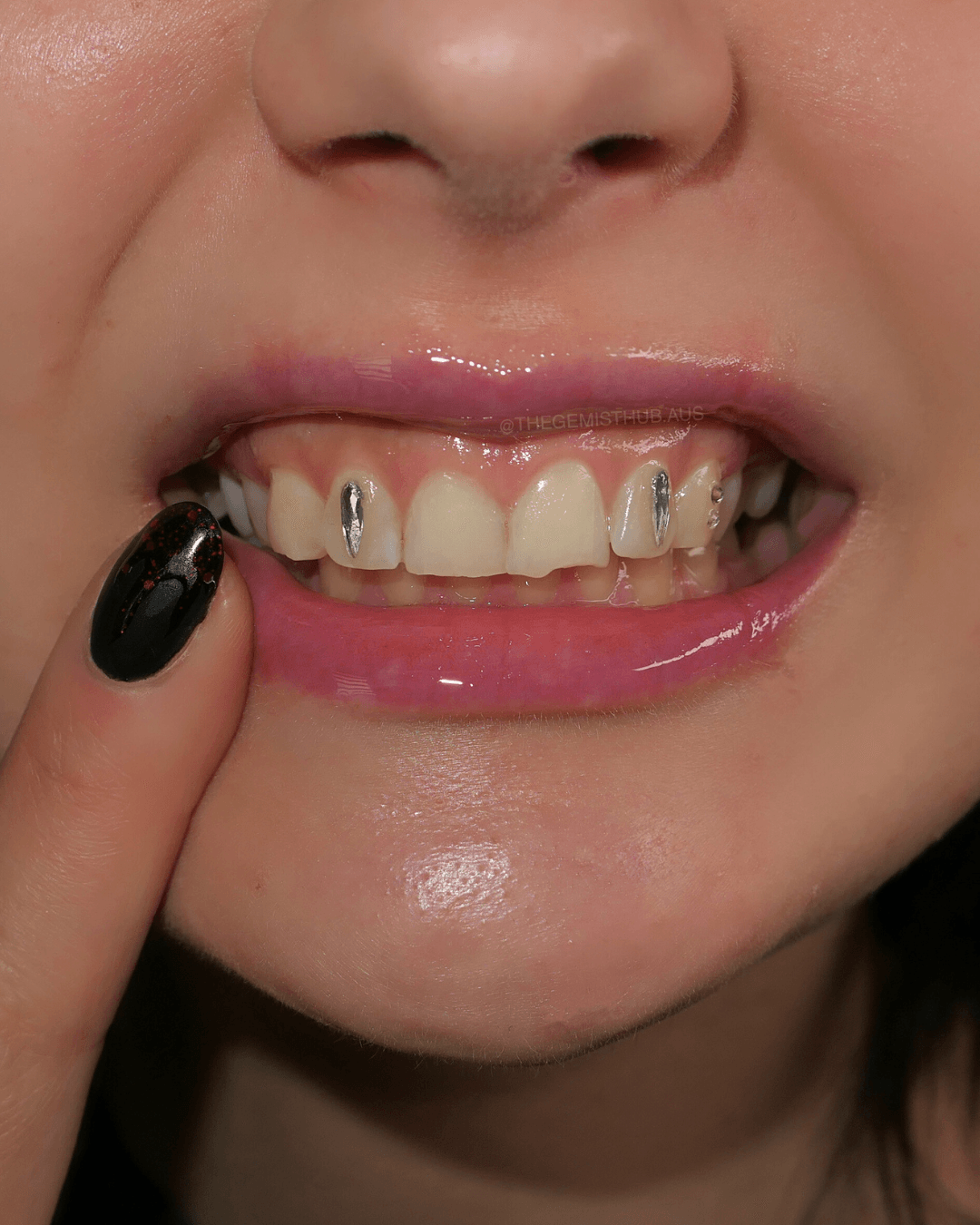

When a gem falls off prematurely, the instinct is to blame technique — "maybe I did not cure long enough" or "maybe I used too much composite." But in my experience training technicians globally, technique is rarely the root cause. The real issues are upstream: in assessment, preparation, and understanding of the materials you are working with.
Here are the five most common bonding mistakes I see, and what they actually indicate.
Mistake 1: Ignoring Enamel Condition
This is the most critical and most common. Technicians apply the same etch time (usually 15 seconds) to every client without assessing the enamel's current state.
But enamel is not static. A client who just drank coffee has acidic enamel. A client on antihistamines has dry mouth, concentrating acids. A client with fluorosis has altered prism structure. Each requires a different approach.
The fix: Learn to assess enamel condition before etching. This requires understanding the biology behind bonding — not just the application steps.
Mistake 2: Moisture Contamination
Dental adhesives are hydrophobic — they do not bond well in the presence of moisture. Even a microscopic layer of saliva between etching and bonding can reduce bond strength by 50% or more.
This mistake happens when:
- Isolation is inadequate (no cotton rolls, no cheek retractor)
- The client swallows or moves during the bonding window
- The technician takes too long between etching and bonding, allowing saliva to re-contaminate
The fix: Invest in proper isolation equipment. Practice a smooth, efficient workflow that minimises the time between etching and bonding. If contamination occurs, re-etch rather than bonding to a compromised surface.
Mistake 3: Incorrect Composite Thickness
Too much composite creates a bulky, raised bond that interferes with the client's bite and is more susceptible to shearing forces. Too little composite leaves insufficient material to secure the gem.
The ideal composite layer is thin enough to sit flush with the tooth surface but thick enough to fully encapsulate the gem's bonding surface. This requires practice and an understanding of composite flow characteristics.
The fix: Practice composite application on extracted teeth or models. Learn to read your composite — its viscosity, flow rate, and curing behaviour. The right amount should create a barely perceptible transition between gem and enamel.
Mistake 4: Inadequate Curing
UV curing seems simple — point the light, wait, done. But curing depth and completeness depend on several factors that most training programs never cover:
- Light intensity — older or lower-quality curing lights may not deliver adequate energy
- Distance — curing effectiveness decreases with distance. The light tip should be as close to the composite as possible
- Angle — the light must reach the composite from the correct angle to cure the deepest layers
- Duration — opaque gems or deeply pigmented composites require longer cure times
The fix: Understand your curing light's specifications. Test it regularly. Cure from multiple angles when working with opaque or deeply coloured gems. Ensure you are curing for the full recommended time — and add time for challenging scenarios.
Mistake 5: No Post-Application Assessment
The appointment is not over when the light turns off. Many technicians skip the post-application assessment — checking bite interference, composite margins, and initial bond integrity before the client leaves.
Unchecked bite interference is a leading cause of early gem loss. If the gem contacts the opposing tooth during normal chewing, the repeated force will eventually dislodge it — regardless of how well the bonding was executed.
The fix: After curing, check the bite with articulating paper. Ensure the gem does not create a premature contact. Smooth any rough composite margins. Confirm the bond feels solid. Take the extra 2 minutes — it prevents callbacks and redos.
The Common Thread
Notice that none of these mistakes are about "doing the steps wrong." They are about not understanding the clinical context around each step. This is the gap between technique-only training and dental-grade education.
A technician who knows the steps can apply a gem. A technician who understands the biology can troubleshoot failures, adapt to variables, and deliver consistently excellent results.
Want to go deeper? Our training programs cover the clinical science behind every step — not just the technique.
Explore Training ProgramsStart with our free retention guide for a printable pre-application checklist, or read about the science of enamel for more on the biology of bonding.